
Announcement: Acupuncture Techniques Course
Acupuncture is an invasive clinical technique. Training should emphasize relevant anatomy, sterile technique, contraindications, informed consent, adverse-event awareness, and applicable professional and regulatory requirements. Traditional concepts should be distinguished from established biomedical anatomy and physiology.
Acupuncture is an invasive clinical technique. Training should emphasize relevant anatomy, sterile technique, contraindications, informed consent, adverse-event awareness, and applicable professional and regulatory requirements. Traditional concepts should be distinguished from established biomedical anatomy and physiology.
Acupuncture is an invasive clinical technique. Training should emphasize relevant anatomy, sterile technique, contraindications, informed consent, adverse-event awareness, and applicable professional and regulatory requirements. Traditional concepts should be distinguished from established biomedical anatomy and physiology.
Acupuncture is an invasive clinical technique. Training should emphasize relevant anatomy, sterile technique, contraindications, informed consent, adverse-event awareness, and applicable professional and regulatory requirements. Traditional concepts should be distinguished from established biomedical anatomy and physiology.


Tại sao nên học kỹ thuật châm cứu ngay hôm nay?
Acupuncture is an invasive clinical technique. Training should emphasize relevant anatomy, sterile technique, contraindications, informed consent, adverse-event awareness, and applicable professional and regulatory requirements. Traditional concepts should be distinguished from established biomedical anatomy and physiology.
Acupuncture is an invasive clinical technique. Training should emphasize relevant anatomy, sterile technique, contraindications, informed consent, adverse-event awareness, and applicable professional and regulatory requirements. Traditional concepts should be distinguished from established biomedical anatomy and physiology.

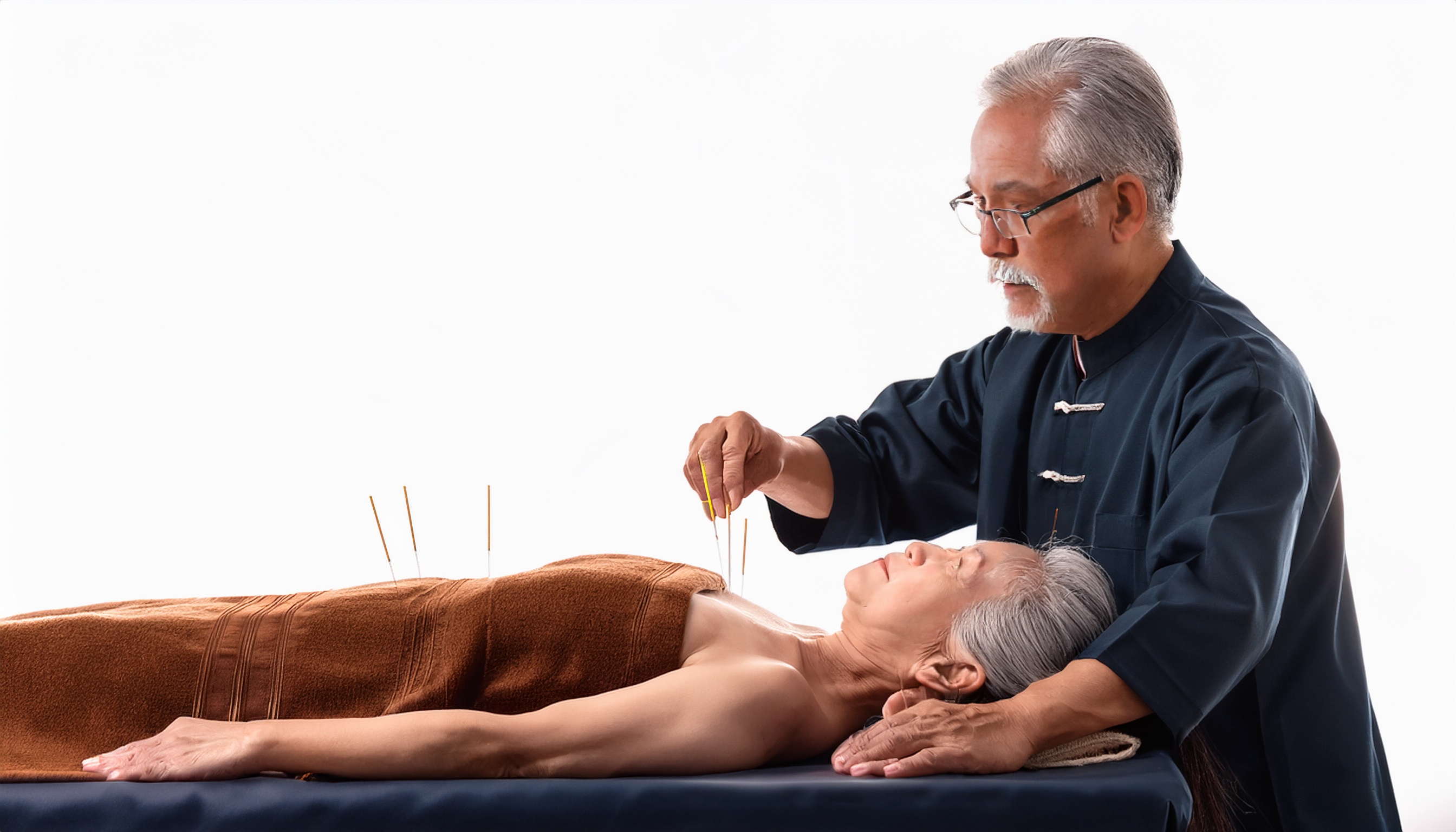
Mục tiêu khóa học
Acupuncture is an invasive clinical technique. Training should emphasize relevant anatomy, sterile technique, contraindications, informed consent, adverse-event awareness, and applicable professional and regulatory requirements. Traditional concepts should be distinguished from established biomedical anatomy and physiology.
Acupuncture is an invasive clinical technique. Training should emphasize relevant anatomy, sterile technique, contraindications, informed consent, adverse-event awareness, and applicable professional and regulatory requirements. Traditional concepts should be distinguished from established biomedical anatomy and physiology.
Acupuncture is an invasive clinical technique. Training should emphasize relevant anatomy, sterile technique, contraindications, informed consent, adverse-event awareness, and applicable professional and regulatory requirements. Traditional concepts should be distinguished from established biomedical anatomy and physiology.
Acupuncture is an invasive clinical technique. Training should emphasize relevant anatomy, sterile technique, contraindications, informed consent, adverse-event awareness, and applicable professional and regulatory requirements. Traditional concepts should be distinguished from established biomedical anatomy and physiology.
Acupuncture is an invasive clinical technique. Training should emphasize relevant anatomy, sterile technique, contraindications, informed consent, adverse-event awareness, and applicable professional and regulatory requirements. Traditional concepts should be distinguished from established biomedical anatomy and physiology.
Acupuncture is an invasive clinical technique. Training should emphasize relevant anatomy, sterile technique, contraindications, informed consent, adverse-event awareness, and applicable professional and regulatory requirements. Traditional concepts should be distinguished from established biomedical anatomy and physiology.
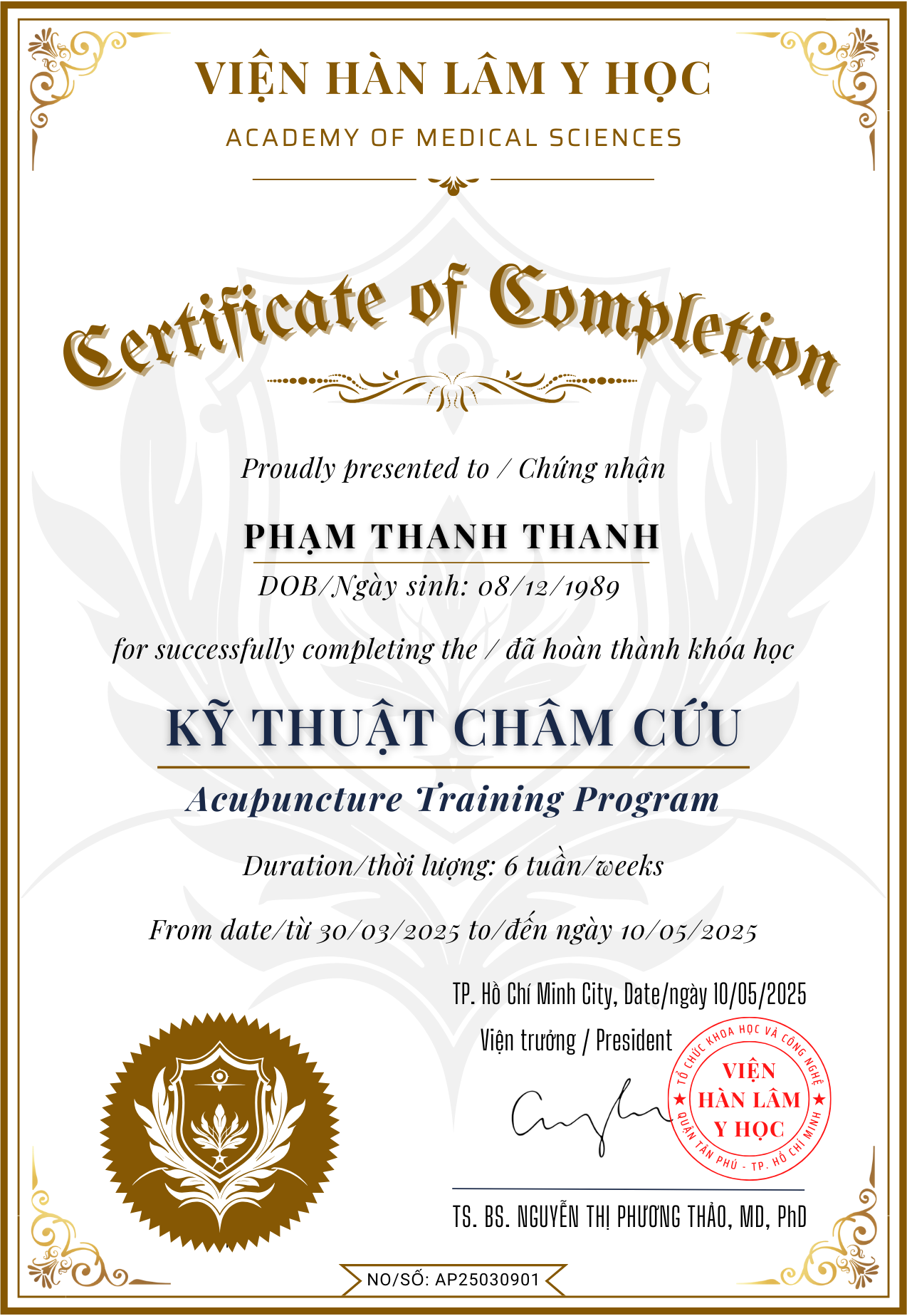
Program
Acupuncture is an invasive clinical technique. Training should emphasize relevant anatomy, sterile technique, contraindications, informed consent, adverse-event awareness, and applicable professional and regulatory requirements. Traditional concepts should be distinguished from established biomedical anatomy and physiology.
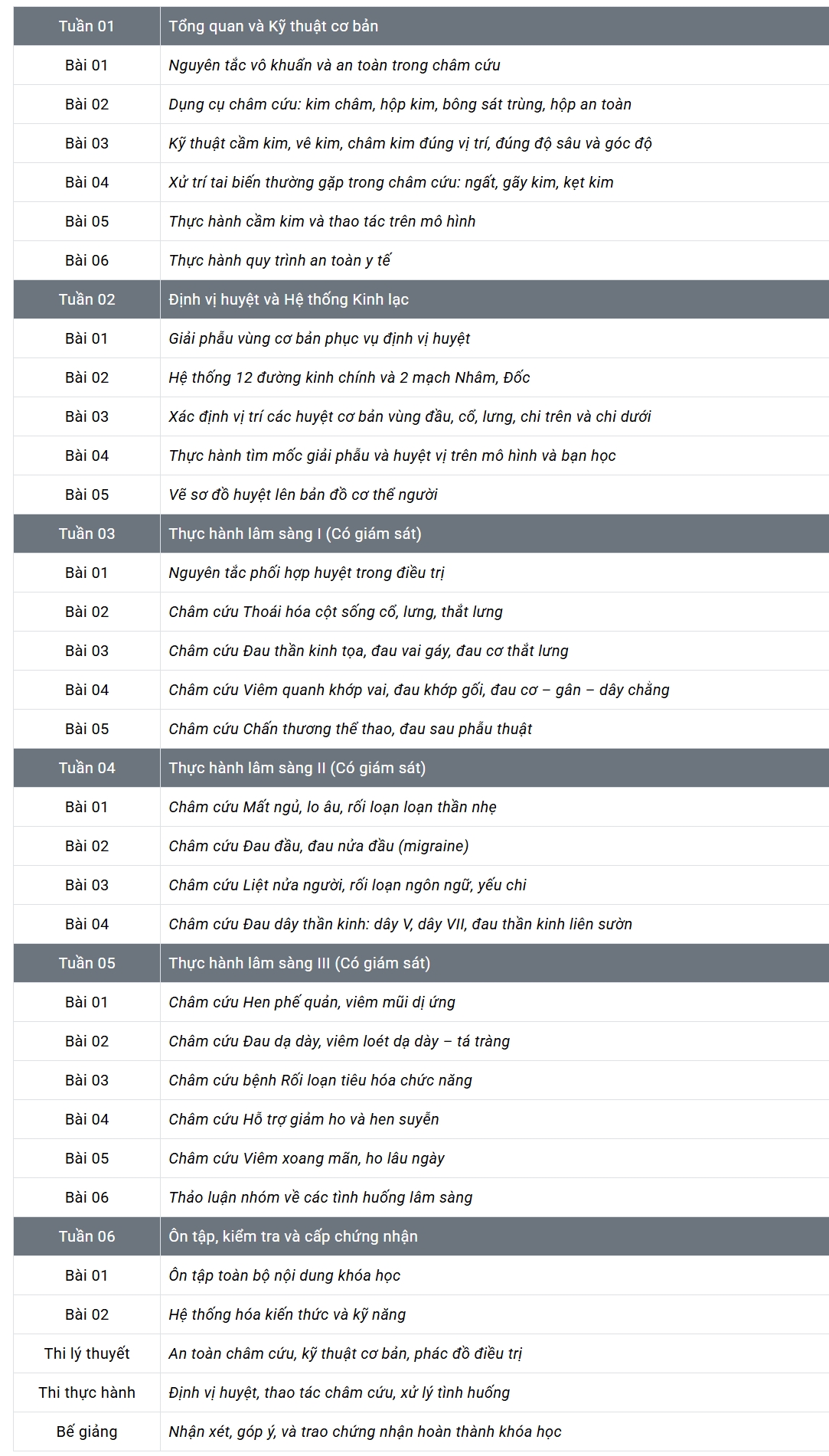
Giảng viên là ai?
Acupuncture is an invasive clinical technique. Training should emphasize relevant anatomy, sterile technique, contraindications, informed consent, adverse-event awareness, and applicable professional and regulatory requirements. Traditional concepts should be distinguished from established biomedical anatomy and physiology.
- Acupuncture is an invasive clinical technique. Training should emphasize relevant anatomy, sterile technique, contraindications, informed consent, adverse-event awareness, and applicable professional and regulatory requirements. Traditional concepts should be distinguished from established biomedical anatomy and physiology.
- Acupuncture is an invasive clinical technique. Training should emphasize relevant anatomy, sterile technique, contraindications, informed consent, adverse-event awareness, and applicable professional and regulatory requirements. Traditional concepts should be distinguished from established biomedical anatomy and physiology.
Acupuncture is an invasive clinical technique. Training should emphasize relevant anatomy, sterile technique, contraindications, informed consent, adverse-event awareness, and applicable professional and regulatory requirements. Traditional concepts should be distinguished from established biomedical anatomy and physiology.


Thông tin khai giảng
- Ngày khai giảng: 19/05/2024
- Acupuncture is an invasive clinical technique. Training should emphasize relevant anatomy, sterile technique, contraindications, informed consent, adverse-event awareness, and applicable professional and regulatory requirements. Traditional concepts should be distinguished from established biomedical anatomy and physiology.
- Acupuncture is an invasive clinical technique. Training should emphasize relevant anatomy, sterile technique, contraindications, informed consent, adverse-event awareness, and applicable professional and regulatory requirements. Traditional concepts should be distinguished from established biomedical anatomy and physiology.
- Acupuncture is an invasive clinical technique. Training should emphasize relevant anatomy, sterile technique, contraindications, informed consent, adverse-event awareness, and applicable professional and regulatory requirements. Traditional concepts should be distinguished from established biomedical anatomy and physiology.
- Acupuncture is an invasive clinical technique. Training should emphasize relevant anatomy, sterile technique, contraindications, informed consent, adverse-event awareness, and applicable professional and regulatory requirements. Traditional concepts should be distinguished from established biomedical anatomy and physiology.