
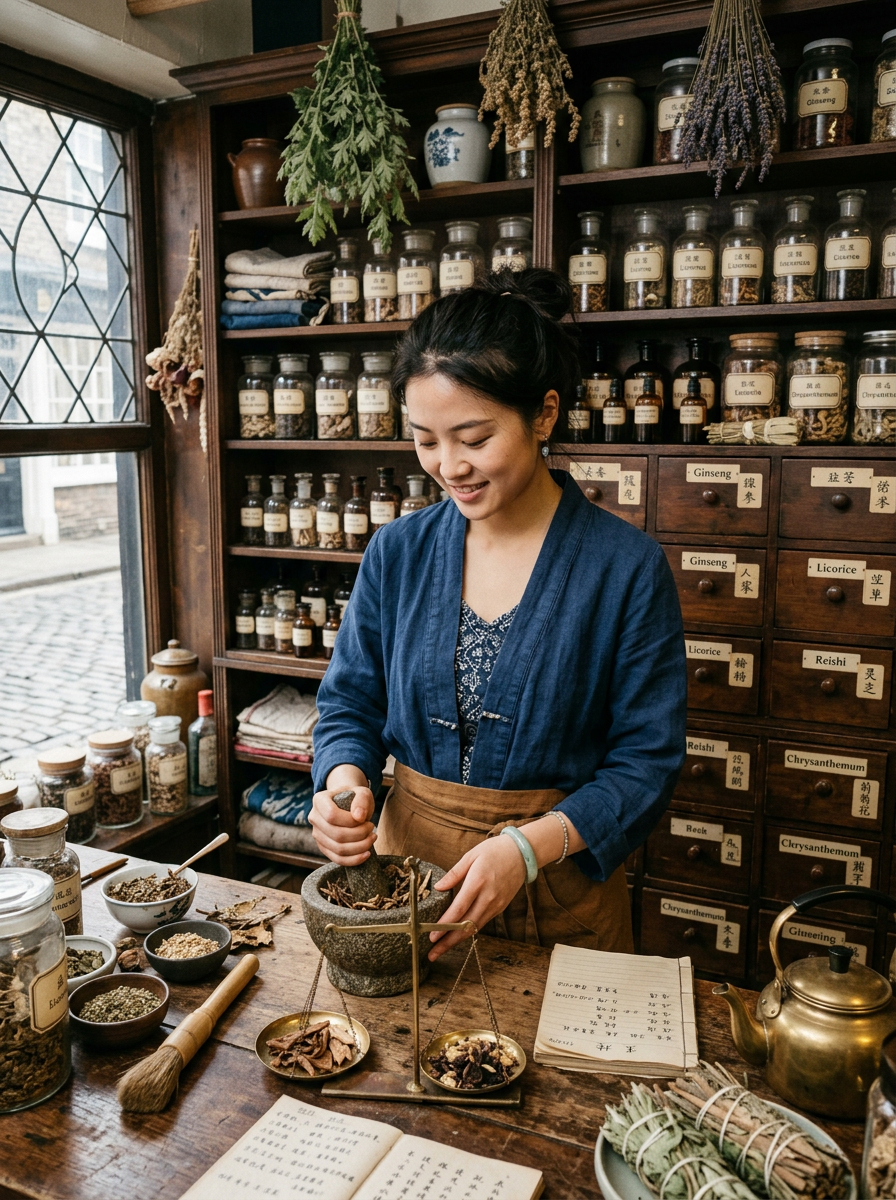
Herbalist Level 1
The Herbalist Level 1 course at the ACADEMY OF MEDICINE is an introductory program for those who want to enter the world of herbal medicine, where traditional medicine meets modern science. The course helps learners understand the mechanisms of medicinal herbs, as well as how to identify, harvest, preserve, prepare, and apply herbs in health care, disease prevention, and natural supportive therapy.
The "Herbalist Level 1" course at Academy of Medical Sciences is designed to provide learners with the essential knowledge and skills needed to prepare and apply herbal remedies in natural healthcare practices.
Target Learners
- Herbal enthusiasts and those interested in herbs: People who are passionate about and wish to gain a deeper understanding of herbs and how to apply them in everyday life.
- Entrepreneurs and manufacturers: People working in the production and business of herbal products who wish to better understand herbal preparation processes and applications.
- Students and learners of Traditional Medicine: Those currently studying or who have graduated from fields related to traditional medicine, pharmacy, and herbal medicine.
- Healthcare professionals: Doctors, pharmacists, and healthcare practitioners who wish to enhance their knowledge and skills in herbal preparation and use.
Program Content
The “Herbalist Level 1” course at Academy of Medical Sciences is an introductory program for anyone who wants to enter the world of herbal medicine – where traditional medicine meets modern science. The course helps learners understand the mechanisms of herbal medicines, as well as how to identify, harvest, preserve, prepare, and apply herbs in health maintenance, disease prevention, and natural therapeutic support.
Through theoretical lessons, hands-on practice, and real-world experiences, learners will build a strong foundation for becoming an Herbalist – developing an in-depth understanding of the human body, the medicinal properties of plants, and how to combine herbs safely and effectively.
After completing Herbalist Level 1, learners will be able to:
- Understand the fundamentals of natural pharmacology and human physiology.
- Prepare, formulate, and use various herbal preparations (teas, syrups, tinctures, oils, powders, extracts, etc.).
- Apply herbs in everyday health care, including support for sleep, digestion, immunity, and emotional balance.
- Build a foundation for continuing to Herbalist Level 2 – Advanced Therapeutic Applications.
This introductory module explores the history and philosophy of herbal medicine, from Traditional Chinese Medicine and Ayurveda to modern Western Herbalism. Instructors help learners understand that Herbalism is not simply about using medicinal plants, but rather a holistic approach to health and healing – encompassing the body, mind, and energy. Learners will explore the principles of “hot – cold – moist – dry,” plant energetics, how medicinal properties affect the body and mind, and the relationship between plants and human health. The module also introduces the concept of Energetic Herbalism, helping learners develop a deeper awareness of the connection between people and plants.
- Lesson 1: History and Philosophy of Herbalism – From Tradition to Modern Practice
- Lesson 2: Energetic Principles and the Four Fundamental Properties of Herbs
- Lesson 3: Herbal Classification Systems and the Concept of “Companion Plants”
- Lesson 4: The Role of the Herbalist in Modern Integrative Medicine
To practice Herbalism safely, learners need to understand how the human body functions. This module introduces the basic structure and functions of the major body systems (digestive, circulatory, nervous, respiratory, excretory, and immune systems) and how different herbs interact with each system. Instructors explain the absorption, metabolism, and elimination of herbal active compounds, along with safety principles for combining herbal remedies. Learners will also explore how to observe the body through the traditional language of herbal medicine – recognizing signs of imbalance through the skin, eyes, tongue, sleep patterns, and emotions.
- Lesson 1: Overview of Body Systems and Their Role in Biological Balance
- Lesson 2: How Herbs Affect the Body – Natural Pharmacological Mechanisms
- Lesson 3: Principles of Safe Herbal Combinations and Avoiding Drug Interactions
- Lesson 4: Observing the Body and Identifying Signs of Imbalance
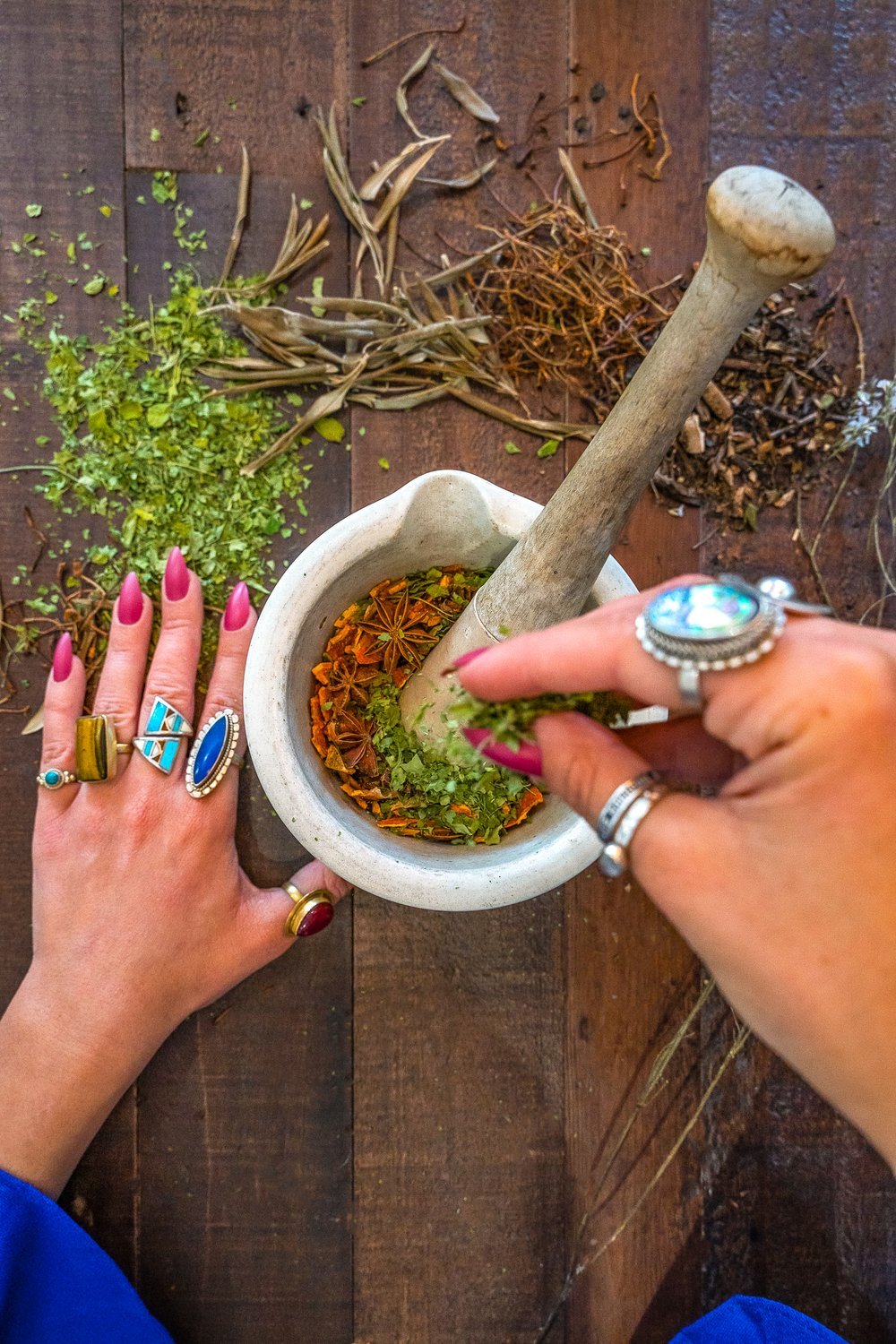
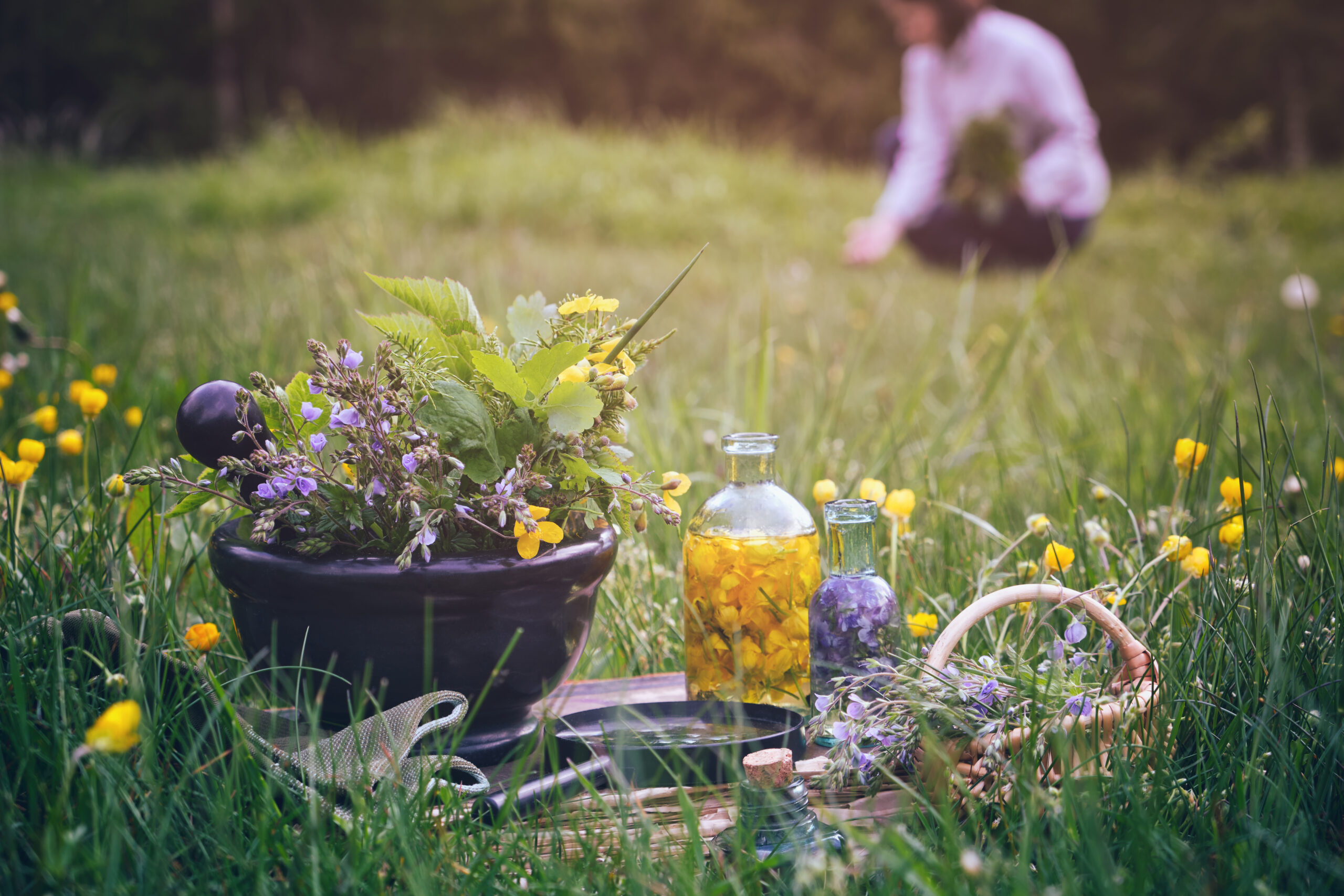
This is an outdoor practical module that allows learners to connect directly with plants. Instructors teach learners how to identify medicinal plants in nature, distinguish medicinal plants from toxic plants, and harvest them at the appropriate time, using the correct plant parts and season to preserve their medicinal properties. Learners will study methods for drying, dehydrating, grinding, powdering, and preserving herbs, along with principles for protecting natural resources sustainably. The module also incorporates local botanical maps to help learners identify common medicinal plants in their surroundings.
- Lesson 1: Identifying and Classifying Local Herbs
- Lesson 2: Harvesting Principles – Preserving Energy and Medicinal Properties
- Lesson 3: Methods for Preserving Dried, Fresh Herbs and Essential Oils
- Lesson 4: Practical Identification of Medicinal Plants in Natural Environments
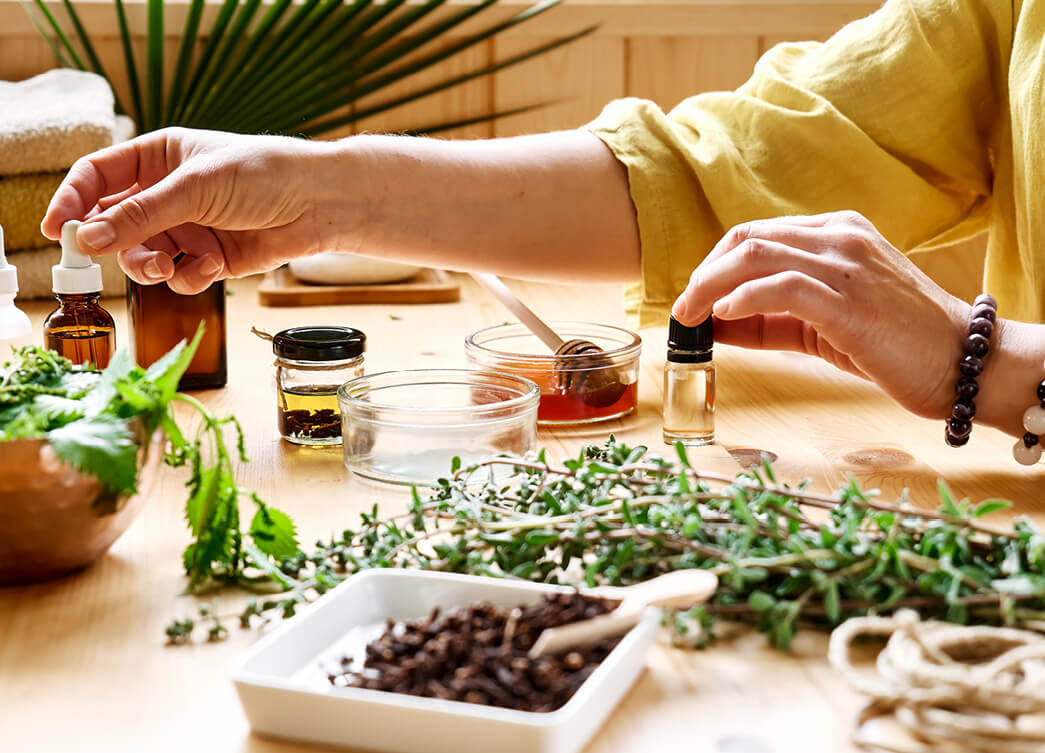
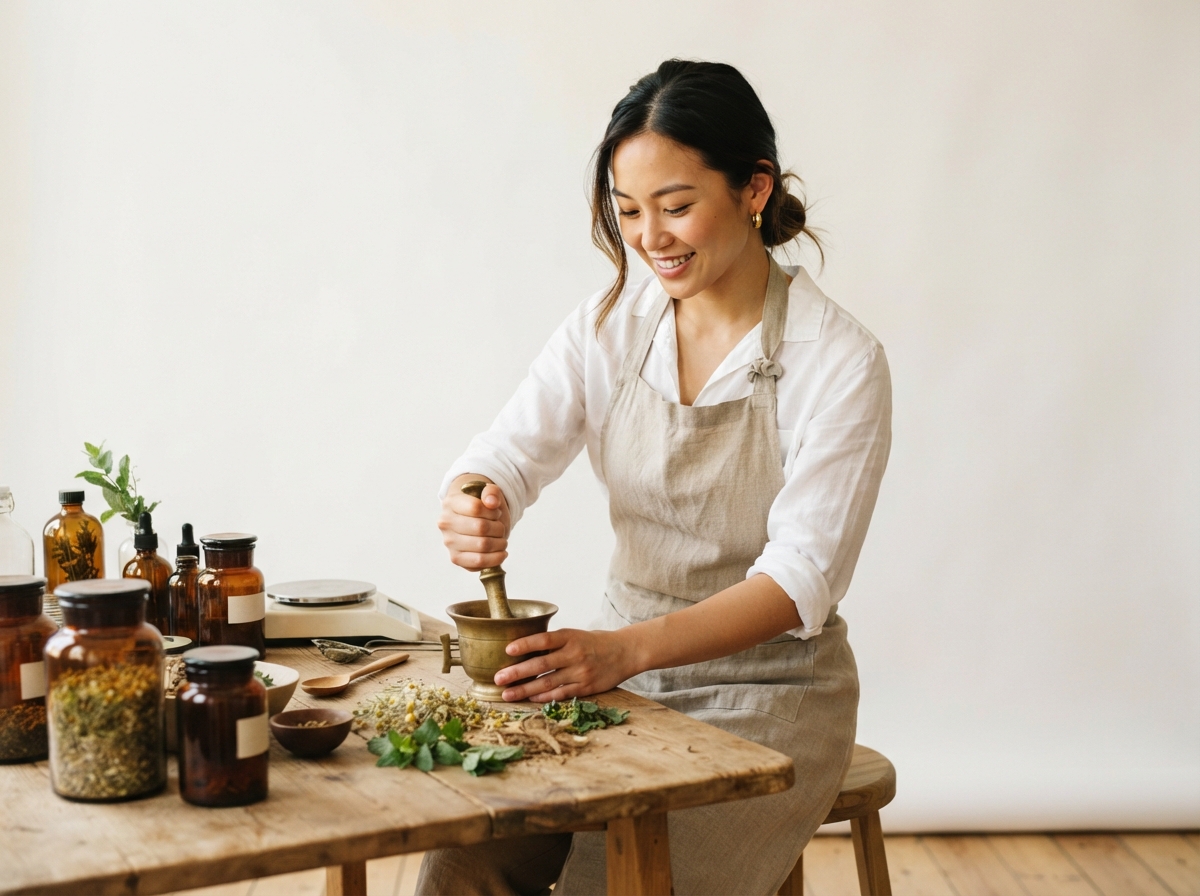
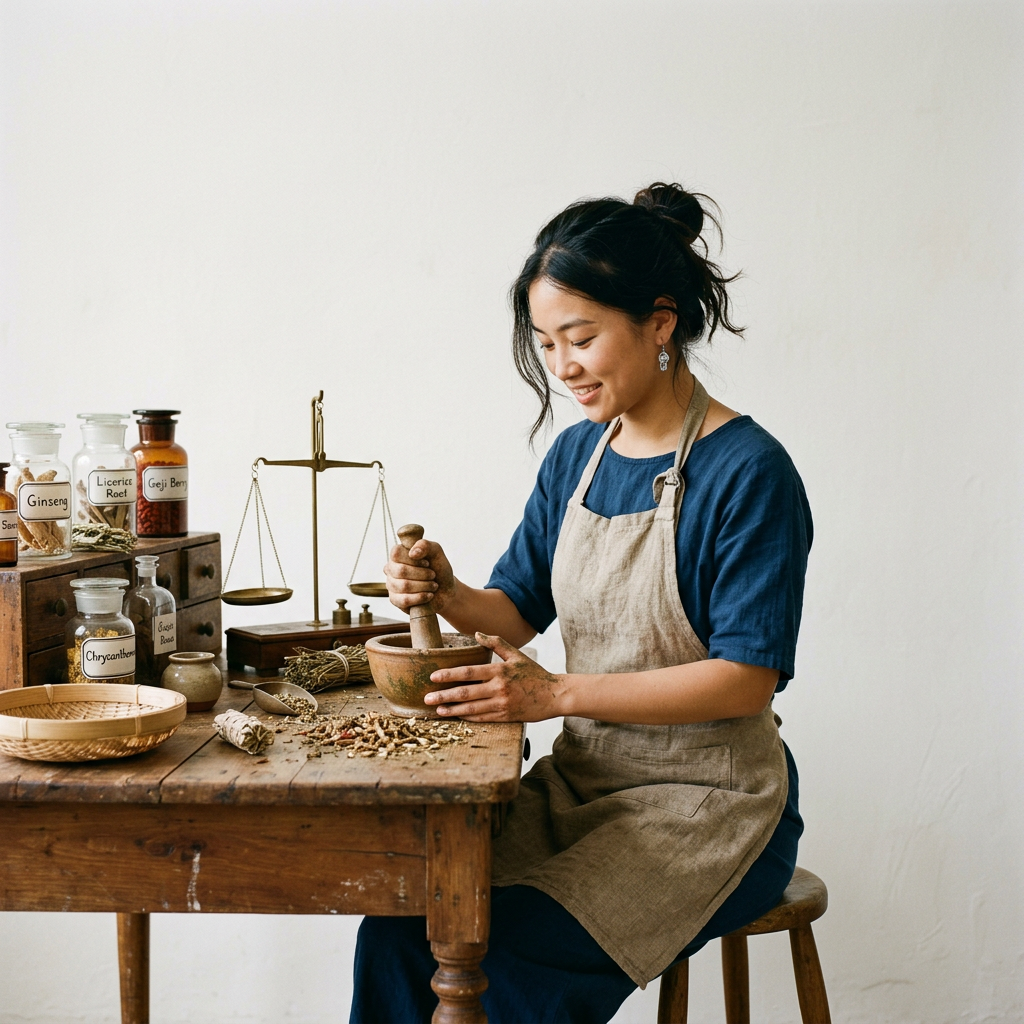
This module is the “herbal laboratory” – where learners directly prepare and experience some of the most fundamental herbal preparations in Herbalism. Instructors guide learners through herbal infusions and decoctions, tinctures, infused oils, syrups, extracts, powders, poultices, massage oils, and more. Learners study how to select appropriate extraction solvents (water, alcohol, glycerin, and vegetable oils), basic formulation principles, and hygiene standards for practical preparation. The hands-on component enables learners to create simple herbal health and wellness products at home.
- Lesson 1: Introduction to Herbal Preparation Methods
- Lesson 2: Preparing Herbal Teas, Decoctions, and Water Extracts
- Lesson 3: Making Tinctures, Herbal Oils, Syrups, and Soft Extracts
- Lesson 4: Practical Preparation of Herbal Products for Everyday Health
The final module focuses on the practical application of herbs in everyday life. Instructors guide learners in using different groups of medicinal herbs to support nervous system balance, improve sleep, support digestion, strengthen immunity, support liver health, care for the skin, and promote emotional balance. Learners will learn how to build a personal herbal medicine cabinet and select appropriate medicinal plants based on individual constitution, climate, and biological rhythms. The module concludes with a comprehensive practical assignment: learners design their own “natural herbal healthcare product set” – an important assessment for earning the Herbalist Level 1 certificate.
- Lesson 1: Herbal Applications for the Digestive, Nervous, and Immune Systems
- Lesson 2: Relaxing Herbs for Sleep Support and Emotional Balance
- Lesson 3: Herbal Remedies for Skin Care and Overall Wellness
- Lesson 4: Building a Family Herbal Medicine Cabinet and Comprehensive Practice
Program Highlights
This program is an ideal choice for anyone who wants to expand their knowledge and skills in Herbalism. It offers several key advantages designed to help learners develop the essential knowledge and practical skills required in this field. Key benefits include:
- Comprehensive content: The program covers everything from fundamental herbal theory and preparation methods to practical applications in health and wellness.
- Experienced instructors: The teaching team consists of leading experts with extensive experience in traditional medicine and herbal medicine.
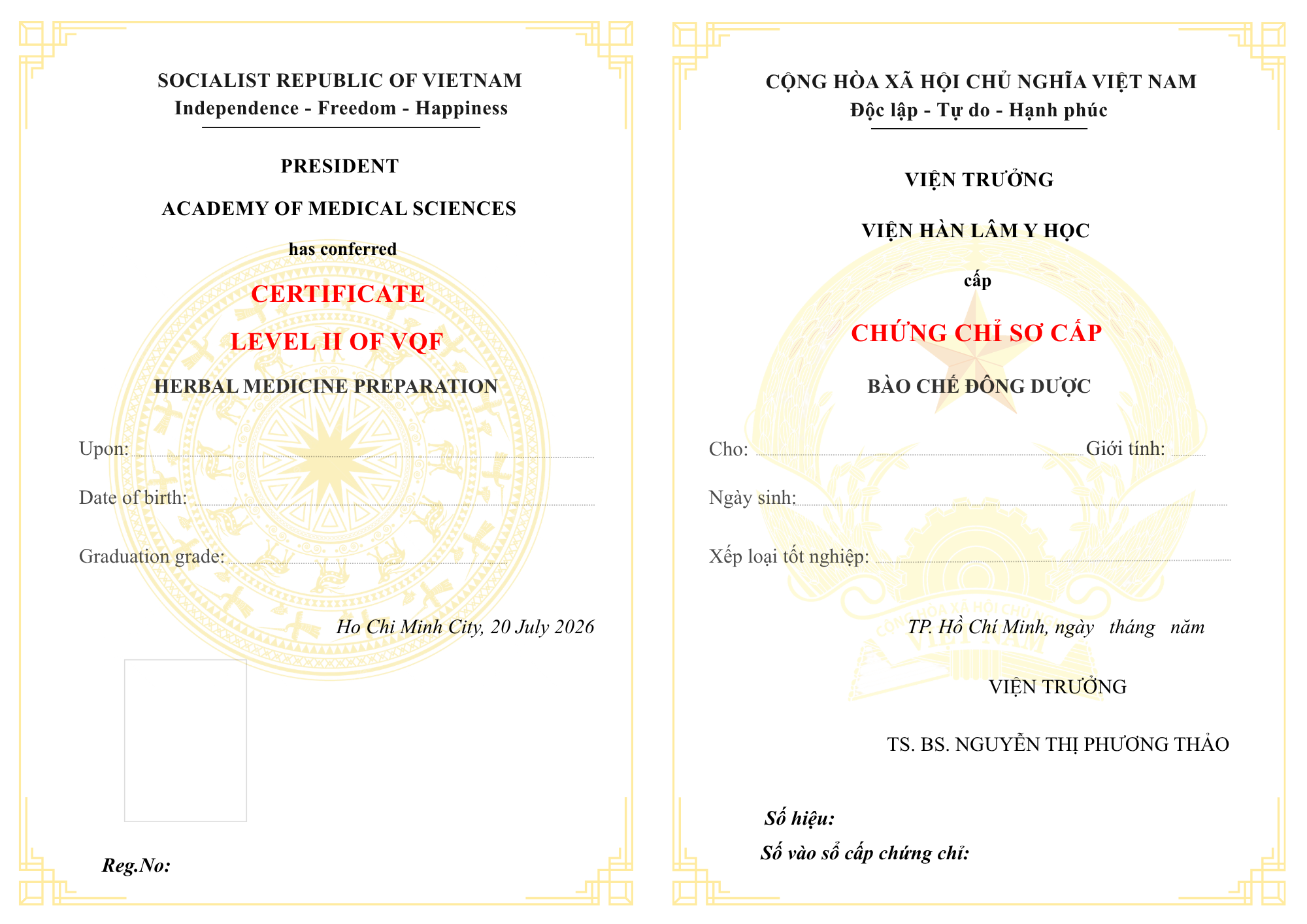
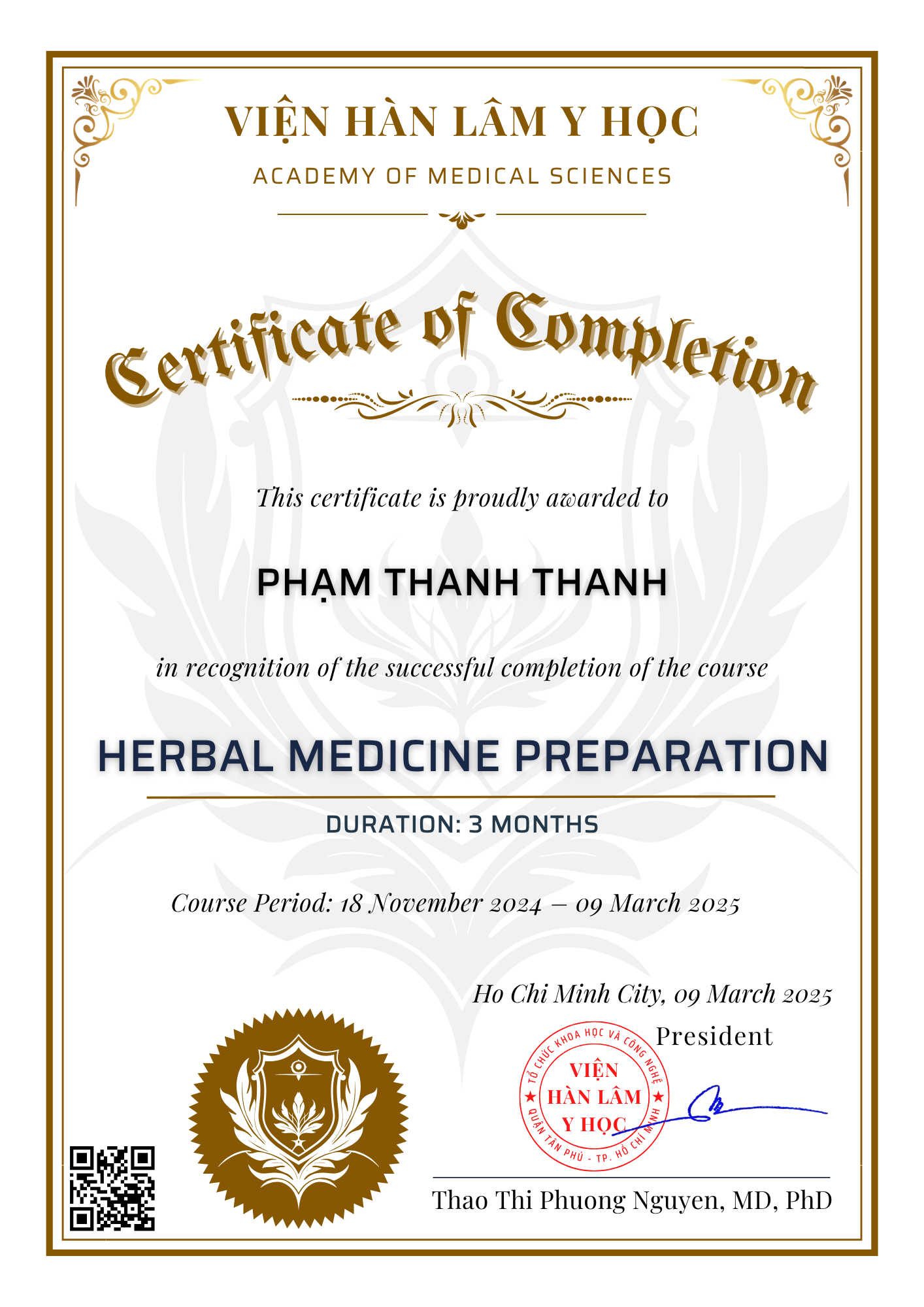
- Recognized certification: Upon completion, learners receive a course completion certificate from Academy of Medical Sciences, providing formal recognition of their training.
- Professional networking: The course enables learners to connect with experts and peers in the field and expand their professional network.
- Practical application: The program emphasizes hands-on learning, enabling learners to apply what they learn directly to their work and everyday life.